
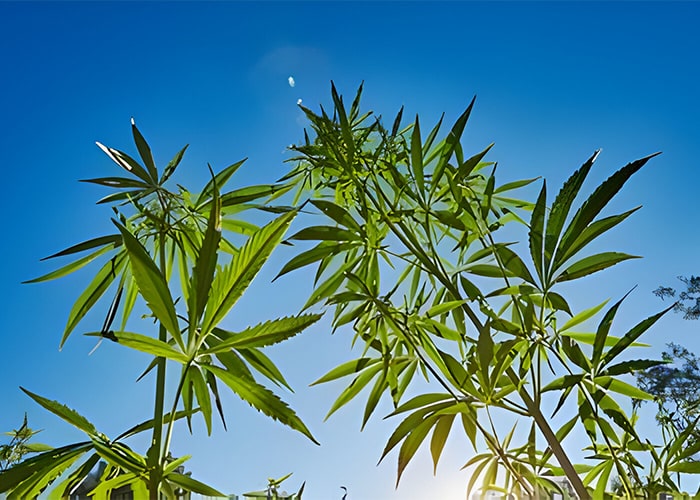
Iowa recently enforced new regulations impacting the sale and potency of consumable hemp products, sparking a legal battle as a group of hemp companies challenges them in federal court. These rules, which limit THC content and enforce packaging standards, have stirred debate within the industry.
The legislation, enacted in May, sets strict limits on THC levels, requiring 4 milligrams per serving and 10 milligrams per container. It also mandates clear warning labels on products and adherence to specific packaging criteria. Furthermore, the law prohibits the sale of synthetic consumable hemp items to minors, aiming to enhance industry regulation.
Despite hemp businesses urging a pause in the rulemaking process, the state proceeded swiftly with enforcing the new regulations. Concerns raised during a recent hearing included frustrations expressed by Scott Selix, co-founder of Climbing Kites, regarding the lack of clarity around compliance with the law. Selix emphasized the challenges faced by businesses in understanding and adhering to the new requirements, especially given the sudden unveiling of the rules just a day before they took effect.
In a statement to The Gazette, Selix highlighted the difficulties encountered, stating, “It’s not an exaggeration to say that I have no idea how to comply with this law. … The department has refused to answer my questions.” This sentiment reflects the confusion and uncertainty prevailing among industry players grappling with the regulatory changes.
Although there was a possibility to delay the rules for 70 days to allow businesses time to adjust, Republican members of the Administrative Rules Review Committee rejected the proposal. State Sen. Cindy Winckler’s attempt to provide a grace period for businesses to align with the new regulations was met with resistance, underscoring the contentious nature of the regulatory landscape surrounding hemp products in Iowa.
Related on Weedly: Keep exploring the Weedly Glossary, our strain reviews, the Learn hub, our Canada coverage and our USA coverage.
Sources & further reading: For authoritative background see Project CBD, Health Canada, NIDA (US National Institute on Drug Abuse), the World Health Organization and Wikipedia.
Why it’s worth following
The cannabis world moves quickly, and topics such as latest regulations impacting hemp cultivation in iowa reflect an industry and culture in constant flux. Regulations change, products evolve, and public attitudes continue to shift, making it easy to fall behind if you are not paying attention. Understanding the context behind a story, rather than just the headline, helps make sense of an increasingly complex space where economics, health, law and culture intersect. For anyone with an interest in cannabis, whether as a consumer, a professional or simply a curious observer, staying informed is the best way to keep pace with the change.
Staying safe and informed
Whatever your level of experience, a few principles make any cannabis-related activity safer and more enjoyable. First, respect local laws, which vary widely and change often. Second, remember that individual responses differ, so what works for one person may not suit another, making moderation and a start-low approach sensible. Third, keep products stored securely and never consume before driving or other activities that require full attention. Cannabis is strictly for adults of legal age, and approaching it thoughtfully, with accurate information rather than assumptions, is the best way to enjoy it responsibly wherever it is permitted.
Related reading on Weedly
- The Weedly cannabis glossary
- More from our News section
- Strain and product reviews
- International cannabis coverage
Final thoughts
There is always more to learn when it comes to subjects like latest regulations impacting hemp cultivation in iowa, and the cannabis landscape will keep evolving alongside changing laws, science and culture. Keeping an open, informed perspective helps you make sense of it all, whether you approach cannabis as a consumer, a professional or an interested observer. Remember that cannabis is strictly for adults of legal age, that rules differ widely from place to place, and that responsible use is the foundation of any positive experience. Explore more of Weedly’s coverage to keep learning, and see how the wider world is changing in our International section.
Where to learn more
Cannabis is a broad subject that spans science, law, culture, health and commerce, and there is always more to explore. Building your knowledge over time, from the basics of cannabinoids and terpenes to the details of how laws differ around the world, makes every aspect of the subject easier to navigate. Reliable information is the best tool any consumer or curious reader can have. Explore more of Weedly’s coverage across news, culture, reviews and education to keep learning, and see how the global picture is evolving in our International section.
Understanding cannabis potency and dosing
One of the most useful things any cannabis consumer can understand is potency and dosing. The strength of cannabis products can vary widely, and the amount of THC or CBD present significantly shapes the experience. The widely recommended approach, whether for flower, edibles or concentrates, is to start with a low amount and wait to feel the effects before considering more. This is especially important with edibles, whose onset is delayed and whose effects can be stronger and longer-lasting than expected. Sensible dosing is the single most reliable way to keep any cannabis experience comfortable and under control.
The endocannabinoid system, briefly
Behind cannabis’s effects lies the body’s endocannabinoid system, a network of receptors that helps regulate functions such as mood, appetite, sleep and pain. Cannabis compounds like THC and CBD interact with this system, which is part of why the plant affects people the way it does. This is also why responses vary so much between individuals, since everyone’s physiology differs. A basic awareness of how cannabis works in the body helps consumers set realistic expectations and understand why factors like dose, tolerance and personal chemistry all play a role in shaping the experience.
Quality, testing and knowing your source
Where cannabis is legal and regulated, one of the biggest advantages over the illicit market is quality control. Regulated products are typically tested for potency and for contaminants such as pesticides, mould and residual solvents, and they carry labelling that tells consumers what they are getting. Choosing tested products from legal, reputable sources is an important part of using cannabis safely. In the less-regulated corners of the market, particularly for some wellness and CBD products, quality and labelling can be inconsistent, so a little care in choosing where you buy goes a long way.