


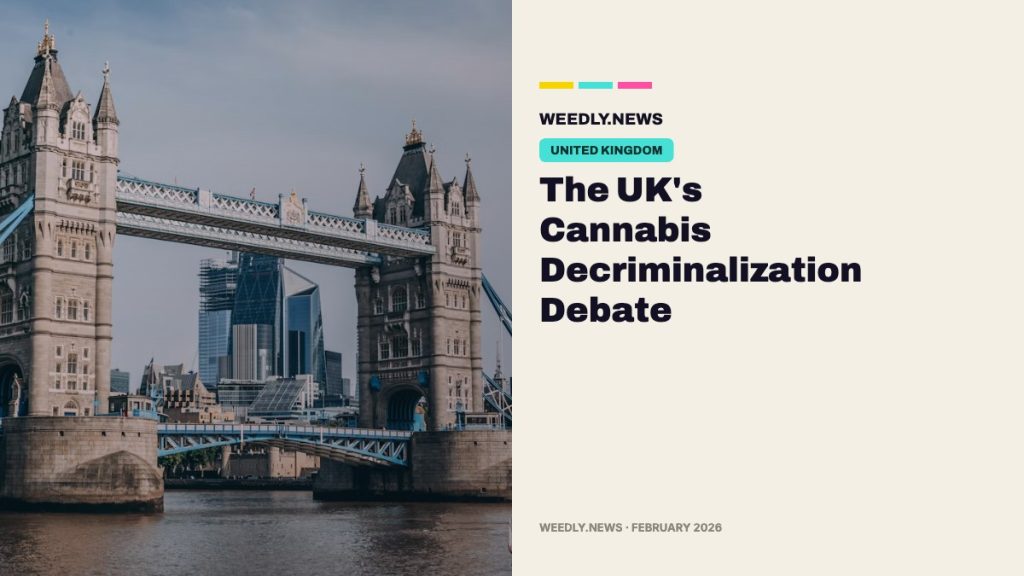
Beyond its well-known but restrictive medical cannabis program, the United Kingdom faces a growing debate over whether to decriminalize or reform its approach to cannabis — fueled by local policing experiments, think-tank reports, shifting public opinion and the visible costs of enforcement — even as the major political parties remain cautious and national policy holds firm on prohibition.
A debate beyond medical cannabis
While the UK’s restrictive medical cannabis program draws much attention, a broader debate over decriminalizing or reforming cannabis policy has grown, fueled by various factors despite official caution. The conversation is expanding. The debate beyond medical cannabis reflects growing questioning of the UK’s prohibitionist approach to recreational cannabis, as reform advocates, some officials and shifting public opinion raise the possibility of decriminalization, even though national policy and the major parties remain cautious.
Cannabis remains illegal
Recreational cannabis remains illegal in the UK, classified as a controlled drug with penalties for possession and supply, though enforcement varies in practice. Prohibition is the legal baseline. The continued illegality of recreational cannabis in the UK provides the context for the reform debate, as the drug remains prohibited under law even as enforcement inconsistencies and reform arguments fuel discussion about whether the prohibitionist approach should change.
Local policing experiments
Some local areas in the UK have experimented with approaches such as diversion schemes or de-prioritizing cannabis possession enforcement, effectively creating localized variations in how cannabis laws are applied. These experiments reflect practical questioning. The local policing experiments illustrate how some areas have sought alternatives to strict enforcement of cannabis possession, such as diversion to education or de-prioritization, reflecting practical concerns about the value of arresting users and contributing to the broader reform debate.
The cost of enforcement
Reform arguments in the UK point to the costs of enforcing cannabis prohibition, including police resources and the consequences of criminal records for users, questioning whether enforcement is worthwhile. Enforcement costs fuel debate. The costs of enforcement are a significant argument in the UK reform debate, as critics contend that policing cannabis possession consumes resources and imposes lasting harms on users through criminal records, raising questions about the effectiveness and fairness of the current approach.
Think-tank and policy reports
Various think-tanks and policy analyses have examined UK cannabis policy and, in some cases, argued for reform, including decriminalization or regulation, contributing evidence and arguments to the debate. These reports inform the conversation. The think-tank and policy reports advocating reform have added intellectual weight to the UK debate, presenting analyses of the costs of prohibition and the potential benefits of alternatives, and helping to keep cannabis policy reform on the agenda despite political caution.
Shifting public opinion
UK public opinion on cannabis has been shifting, with growing support for reform, including decriminalization and medical access, particularly among younger people, contributing to the reform debate. Attitudes are evolving. The shifting public opinion in the UK reflects changing attitudes toward cannabis, with increasing openness to reform, and this evolving sentiment, especially among younger demographics, contributes to the pressure for change even as it has not yet translated into national policy shifts.
Political caution
Despite the debate, the major UK political parties have remained cautious on cannabis, generally opposing recreational legalization and wary of appearing soft on drugs, limiting the prospects for national reform. Politics constrains change. The political caution of the major parties is a key factor limiting cannabis reform in the UK, as concerns about drug policy and political positioning have kept legalization off the mainstream agenda, meaning that despite the debate, national policy has held firm on prohibition.
The medical access gap
The UK’s restrictive medical cannabis program, legal since 2018 but with rare NHS prescriptions, remains a prominent issue, and the difficulties patients face intersect with the broader reform debate. The medical gap fuels reform arguments. The medical access gap, in which medical cannabis is legal but hard to obtain on the NHS, remains a significant part of the UK cannabis conversation, and the frustrations it generates contribute to broader questioning of the country’s cautious and restrictive approach to cannabis.
Comparisons with reforming countries
The UK debate is influenced by comparisons with countries that have reformed cannabis laws, from Germany’s legalization to Portugal’s decriminalization, which reform advocates cite as examples. International comparisons shape arguments. The comparisons with reforming countries provide reference points for the UK debate, as advocates point to the experiences of nations that decriminalized or legalized cannabis, arguing that the UK could adopt similar approaches, while the country’s caution keeps it apart from these reformers.
The prospects for reform
The prospects for UK cannabis reform depend on shifting political will, continued advocacy, evolving public opinion and the arguments about enforcement costs and the medical gap, though national change appears unlikely in the near term. Reform faces obstacles. The prospects for reform in the UK remain uncertain, as the debate continues and pressure builds through shifting opinion and reform arguments, but political caution and the absence of major-party support mean that significant national change to cannabis policy is not imminent.
How the UK compares
The UK is a cautious country on cannabis, with a restrictive medical program and a growing but unresolved decriminalization debate, more cautious than reformers like Germany while facing internal pressure for change. It occupies a debating middle ground. The comparison positions the UK as a cautious nation where reform is debated but not enacted, more restrictive than several European neighbors, with the decriminalization conversation reflecting internal pressure for change against a backdrop of political caution and prohibitionist national policy.
The bottom line
Beyond its restrictive medical program, the UK faces a growing debate over decriminalizing cannabis, fueled by local policing experiments, think-tank reports, shifting public opinion and the costs of enforcement, even as the major parties remain cautious and national policy holds firm on prohibition. While reform appears unlikely in the near term, the persistent debate reflects mounting questions about the UK’s cautious approach and its place among Europe’s reforming nations.
Legalization status by the numbers
- United Kingdom: Recreational cannabis illegal; restrictive medical program; decriminalization debated not enacted
- Germany: Adult possession and home growing legal since 2024
- Portugal: All drug possession decriminalized since 2001
- Public opinion: Growing support for reform, especially among younger people
- Politics: Major parties cautious; national reform unlikely near-term
Related coverage on Weedly
- Cannabis In South Korea Medical
- Mexico Stalled Cannabis Legalization
- South Africa Cannabis Private Use Act
- Cannabis Legalization Public Health Evidence
- Cannabis Legalization Youth Use Evidence