


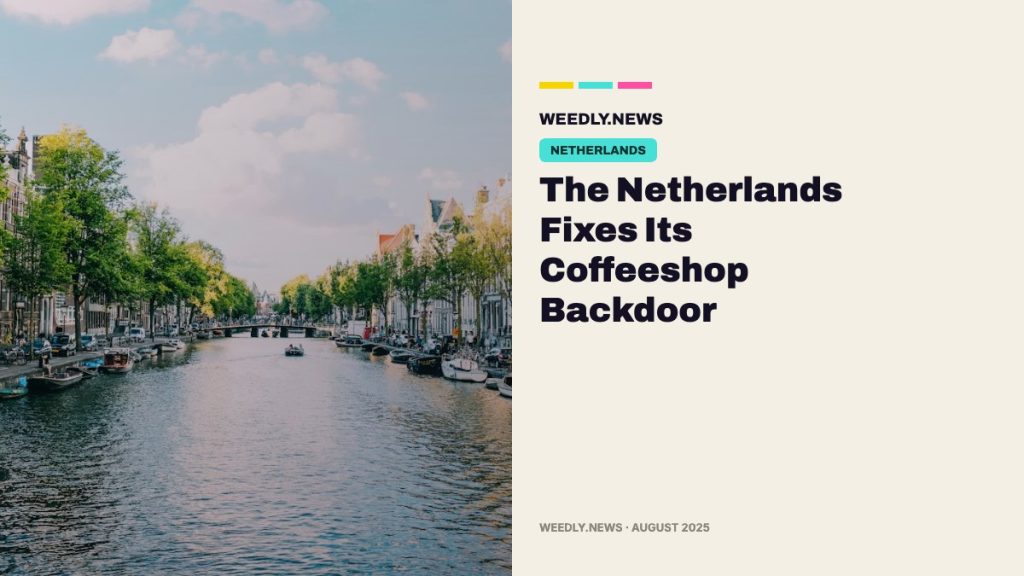
The Netherlands, famous for tolerating cannabis sales in coffeeshops since the 1970s, spent decades with a glaring contradiction: shops could legally sell cannabis to customers but had no legal way to buy their supply — the so-called “backdoor problem.” A government-backed experiment is now supplying coffeeshops with regulated, legally produced cannabis, testing whether the Dutch model can finally be made coherent from seed to sale.
The world’s original tolerance model
The Netherlands pioneered cannabis tolerance, allowing coffeeshops to sell small amounts to adults under a policy of official non-enforcement rather than formal legalization. For decades this made Amsterdam synonymous with accessible cannabis and drew tourists worldwide. The Dutch model was influential precisely because it decoupled the criminal-justice response from personal use, tolerating the front-of-shop sale of cannabis while technically keeping the drug illegal, a pragmatic compromise that shaped global thinking about alternatives to strict prohibition.
The notorious backdoor problem
The model’s central flaw was structural: while selling cannabis to customers through the front door was tolerated, the supply arriving through the back door — cultivation and wholesale — remained illegal and unregulated. Coffeeshops thus depended on an illicit supply chain, meaning a tolerated legal retail sat atop a criminal production system. This “backdoor problem” created quality-control gaps, exposed the trade to organized crime, and made the Dutch approach logically incoherent, a contradiction critics highlighted for years.
Why the contradiction persisted
The backdoor problem endured because fully legalizing production risked conflict with international drug treaties and faced domestic political resistance, particularly from more conservative governments and coalition partners. Reforming supply was politically harder than tolerating sales, so successive administrations left the contradiction unresolved. The tolerance policy also faced periodic tightening, including debates over restricting coffeeshop access to residents, reflecting ongoing tension between the Netherlands’ liberal reputation and cautious political currents.
The regulated supply experiment
To finally address the issue, the Dutch government launched a controlled experiment in which licensed growers legally produce cannabis to supply coffeeshops in selected municipalities. The trial provides shops with regulated, tracked and quality-tested cannabis through a legal chain, allowing authorities to study whether a fully legal supply improves quality, safety and oversight while reducing criminal involvement. It represents the most serious attempt yet to make the Dutch model consistent from cultivation to consumption.
How the trial works
Under the experiment, a limited number of licensed producers grow cannabis under strict conditions, and participating coffeeshops in designated cities sell only this regulated product, tracked through the supply chain. The controlled scope lets researchers and officials evaluate the effects before considering nationwide rollout. Participating shops transition from illicit to legal supply, offering a real-world test of whether regulated production can seamlessly serve the long-established tolerated retail sector without disruption or shortages.
Balancing tourism and residents
The Netherlands has wrestled with cannabis tourism, especially in Amsterdam, where authorities have sought to reduce nuisance and reorient the city away from drug tourism. Some cities restrict coffeeshop access to residents, and Amsterdam has curbed cannabis use in parts of its center. The supply experiment intersects with these debates, as the future of the Dutch model involves not just fixing supply but managing the tourism and public-order pressures that decades of tolerance produced.
Quality, safety and crime
A key promised benefit of regulated supply is quality control: legally produced cannabis can be tested for contaminants, labeled for potency and tracked, unlike illicit product. Proponents also argue it weakens organized crime’s grip on cultivation and wholesale. If the trial demonstrates safer products and reduced criminal involvement without downsides, it would strengthen the case for permanently legalizing the entire chain, resolving the contradiction that has defined Dutch cannabis policy for fifty years.
Lessons for the world
Because the Netherlands is the original tolerance model, its move toward regulated supply carries symbolic weight. Countries designing their own systems, from Germany’s clubs to Switzerland’s pilots, can learn from the Dutch experience of what happens when retail is tolerated but supply is not. The experiment underscores a broader lesson: coherent cannabis policy requires regulating the whole chain, not just the point of sale, a principle now shaping reforms across Europe.
Political fragility
Like all cannabis reforms, the Dutch experiment is subject to political change, and shifting coalitions could alter its scope or future. The Netherlands’ cannabis policy has always reflected delicate compromises, and the transition from experiment to permanent regulated system is not guaranteed. Nonetheless, the very existence of a government-backed legal supply chain marks a significant evolution from decades of unresolved tolerance, whatever its ultimate political fate.
How the Netherlands compares now
Once the world’s most permissive cannabis jurisdiction, the Netherlands has been overtaken in some respects by countries that formally legalized possession and home growing. Yet its supply experiment addresses a problem those newer reforms also face: how to legally supply consumers. The Dutch remain central to the global cannabis story, now testing whether their pioneering but flawed model can mature into a fully regulated system for the first time.
The bottom line
After fifty years of selling cannabis it could not legally buy, the Netherlands is finally experimenting with a legal supply chain to close its infamous backdoor. The trial could transform the world’s oldest tolerance model into a coherent, regulated system, offering valuable lessons to every country grappling with how to supply a legal cannabis market. Whether it becomes permanent will shape the next chapter of Dutch — and European — cannabis policy.
Legalization status by the numbers
- Netherlands: Coffeeshop sales tolerated since the 1970s; regulated legal supply chain now being trialed to fix the ‘backdoor problem’
- Germany: Adult possession and home growing legal since 2024
- Switzerland: Regulated cannabis sales pilots underway
- Malta: Personal use and home growing legal since 2021
- Luxembourg: Home cultivation and personal use legal since 2023
Related coverage on Weedly
- Cannabis In Argentina Medical Home Growing
- Un Treaties Global Cannabis Legalization
- Cannabis In The Netherlands Coffeeshops Weed Experiment
- Exploring The Reasons Behind The Czech Republics Cbd Product Ban
- Cannabis Terpenes Explained